When investing in new flooring, one of the biggest questions property owners ask is: How long will it last?
Whether you’re upgrading a residential garage, renovating a commercial showroom, or installing flooring in a busy warehouse, durability plays an important role in choosing the right material. A floor that looks attractive on installation day is only a good investment if it continues to perform under everyday conditions.
Epoxy flooring is known for its durability, seamless appearance, and resistance to many common sources of wear. However, not every epoxy floor has the same lifespan. Some residential installations can remain in good condition for well over a decade, while heavily used industrial floors may require maintenance or recoating much sooner.
So, what determines how long epoxy flooring lasts?
In this guide, we’ll explore the expected lifespan of epoxy floors, the factors that affect their durability, common signs of wear, and practical ways to help your flooring last longer.
What Is the Average Lifespan of Epoxy Flooring?
A professionally installed epoxy floor can last for many years, but its lifespan depends on the coating system, surface preparation, environmental conditions, and daily usage.
As a general planning reference, residential epoxy flooring may last approximately 10–20 years under suitable conditions. Commercial and industrial installations often experience more demanding use, which can shorten the time between maintenance or recoating.
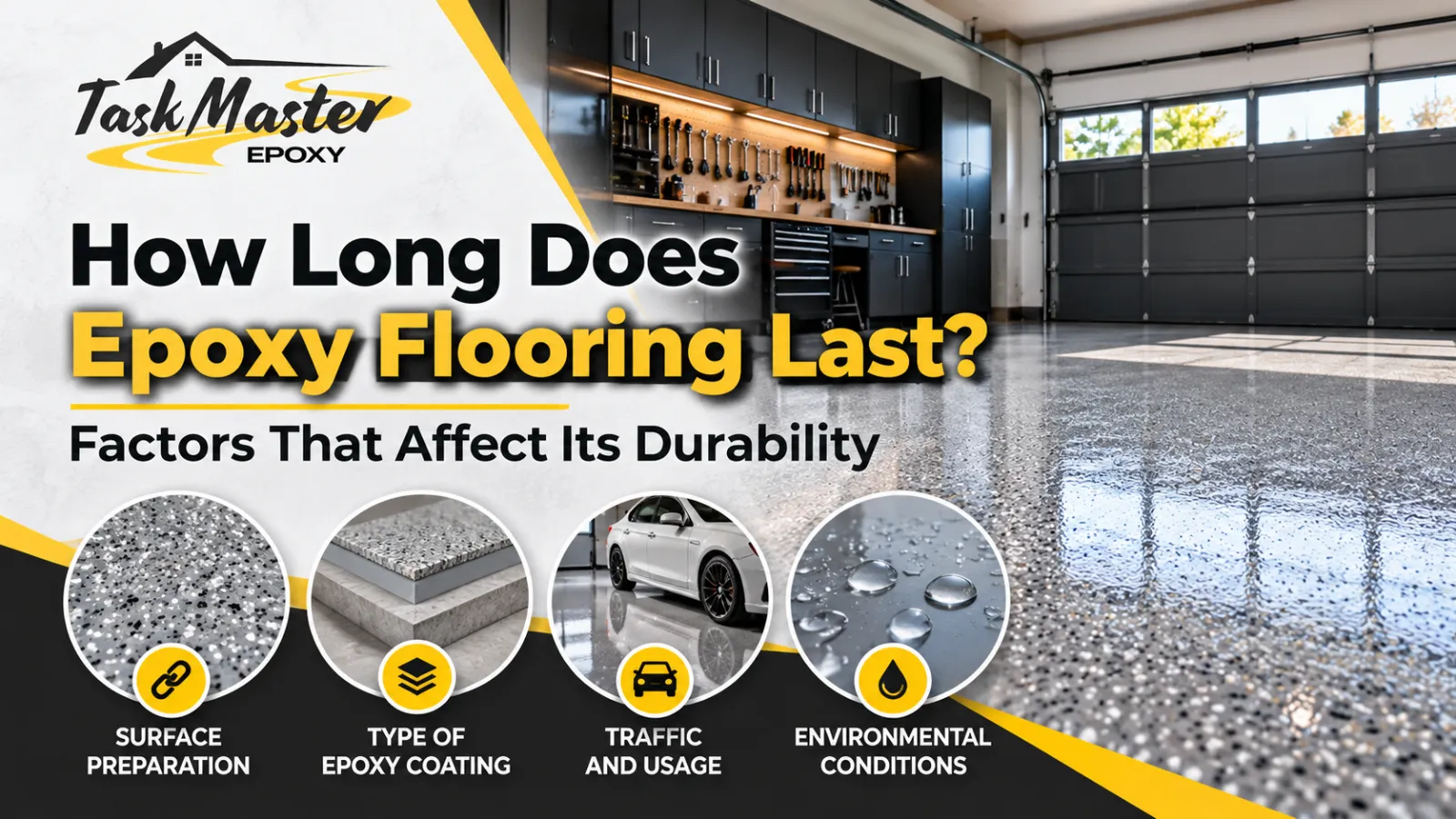
8 Key Factors That Affect Epoxy Flooring Durability
Several factors influence how long an epoxy coating maintains its appearance, adhesion, and protective properties.
1. Concrete Surface Preparation
Proper surface preparation is one of the most important factors affecting epoxy flooring durability.
Before applying epoxy, the concrete must be evaluated and prepared to create a suitable surface for bonding. If dust, oil, grease, old coatings, or weak concrete remain, the epoxy may not adhere properly.
Professional preparation may involve:
- Concrete grinding to achieve the required surface profile
- Removing existing coatings and surface contaminants
- Repairing cracks, chips, and damaged concrete
- Testing for moisture-related concerns
- Cleaning the surface before coating application
Poor preparation can result in peeling, bubbling, or premature coating failure.
Why it matters: Even a high-quality epoxy product may fail early if it is applied over an improperly prepared concrete surface.
2. Quality and Type of Epoxy Coating
Not all epoxy flooring products offer the same level of durability.
Thin, decorative coatings and heavy-duty industrial systems are designed for different applications. The resin formulation, coating thickness, number of layers, and protective topcoat can all influence performance.
For example:
- Solid Colour Epoxy Flooring: Suitable for many residential and commercial spaces where a uniform finish is preferred.
- Decorative Flake Epoxy Flooring: Popular for garages and workshops because of its appearance and customizable texture.
- Quartz Epoxy Flooring: Can provide additional texture and wear resistance when incorporated into an appropriate system.
- Metallic Epoxy Flooring: Often selected for decorative residential interiors, retail environments, and showrooms.
- Industrial Epoxy Flooring: Designed around specific requirements such as equipment traffic, abrasion, and chemical exposure.
Choosing the appropriate system is more important than selecting a coating based on appearance alone.
3. Foot Traffic and Heavy Equipment
The amount and type of traffic a floor receives directly affect its lifespan.
A residential basement with occasional foot traffic generally experiences less wear than a commercial workshop or distribution centre.
Heavy equipment, rolling carts, forklifts, and repeated movement of materials can gradually wear down the coating.
In high-traffic facilities, additional considerations include:
- Wheel type and equipment weight
- Frequency of vehicle movement
- Turning and braking forces
- Impact from dropped tools or materials
- Abrasive dirt carried across the surface
For commercial epoxy flooring, selecting a system designed for actual operating conditions can help reduce premature wear.
4. Moisture and Concrete Conditions
Moisture is a major concern when installing epoxy flooring over concrete.
Although cured epoxy can resist water exposure from above, excessive moisture vapour moving through the concrete slab may interfere with adhesion.
Potential warning signs include bubbling, blistering, peeling, or sections of coating separating from the concrete.
Before installation, contractors should evaluate moisture conditions and determine whether mitigation or repairs are necessary.
This is especially important for basement flooring, ground-level slabs, and older properties with unknown moisture conditions.
5. Chemical Exposure and Spills
Epoxy flooring can resist many common household and industrial substances, but chemical resistance varies between products.
Garages may experience occasional exposure to automotive fluids and road salt, while commercial facilities may use cleaning chemicals, oils, or industrial substances.
Chemical concentration, temperature, and contact duration all influence how a coating performs.
Spills should be cleaned promptly, and property owners should follow the manufacturer’s chemical resistance recommendations.
6. Temperature Changes and UV Exposure
Temperature and sunlight can affect epoxy flooring over time.
Some epoxy formulations may yellow or change colour when exposed to direct ultraviolet light. Temperature fluctuations can also create movement in the underlying concrete.
For garages in Toronto and other parts of Ontario, seasonal conditions may introduce additional challenges, including winter road salt, melting snow, and temperature changes.
UV-stable topcoats or alternative coating systems may be appropriate in areas exposed to substantial sunlight.
7. Installation Quality and Curing
Even a well-selected epoxy system can underperform if it is installed incorrectly.
Application conditions such as surface temperature, humidity, mixing ratios, coating thickness, and curing time must follow the product manufacturer’s specifications.
Using a floor before it has adequately cured can damage the coating or reduce its performance.
Property owners should ask their contractor when the floor can safely accommodate foot traffic, vehicles, furniture, or heavy equipment.
8. Cleaning and Ongoing Maintenance
Epoxy flooring is relatively easy to maintain, but it is not maintenance-free.
Sand, grit, and abrasive debris can gradually scratch or wear the coating, particularly in areas with frequent vehicle or equipment movement.
Regular cleaning, prompt spill removal, and early repairs can help extend the usable life of the floor.
How Long Does Residential Epoxy Flooring Last?
Residential epoxy flooring often experiences lighter traffic than commercial and industrial installations, making it possible for a properly installed system to provide many years of service.
However, durability varies depending on the room and how it is used.
Garage Epoxy Flooring
A residential garage floor may last approximately 10–20 years under favourable conditions.
Its performance depends on vehicle traffic, concrete preparation, road salt exposure, and the coating system.
For homeowners considering residential epoxy flooring in Toronto, choosing a suitable finish and maintaining the floor during winter can help protect its appearance.
Basement Epoxy Flooring
Basement epoxy flooring can provide long-term performance when installed over dry, sound, properly prepared concrete.
Because basements often experience less abrasive traffic, the coating may retain its finish for many years.
However, unresolved moisture problems can cause premature failure regardless of the coating’s quality.
Home Workshops and Utility Rooms
Workshops and utility areas may experience dropped tools, equipment movement, and occasional chemical spills.
An epoxy system designed for these conditions can provide better durability than a purely decorative coating.
How Long Does Commercial and Industrial Epoxy Flooring Last?
Commercial and industrial floors often operate under demanding conditions that can accelerate wear.
A commercial epoxy floor may last approximately 5–10 years before significant maintenance or recoating is required, although actual performance varies considerably.
Warehouses and Distribution Centres
Warehouse epoxy flooring must withstand repeated equipment movement, pallet traffic, and abrasion.
High-traffic routes may wear faster than storage areas or pedestrian walkways.
Restaurants and Commercial Kitchens
Restaurant floors experience frequent cleaning, spills, and foot traffic.
Specialized resin flooring systems may be required in commercial kitchens where heat, thermal shock, or aggressive cleaning chemicals are present. Conventional epoxy is not always the most suitable choice for these conditions.
Retail Stores and Showrooms
Retail and showroom flooring often benefits from relatively predictable pedestrian traffic.
With appropriate cleaning and maintenance, decorative epoxy systems can maintain an attractive finish for many years.
Manufacturing Facilities
Manufacturing floors may encounter impacts, equipment loads, chemical exposure, and continuous operational activity.
The flooring specification should reflect these demands rather than relying on a standard decorative epoxy system.
Signs Your Epoxy Flooring May Need Repair or Replacement
Even durable epoxy flooring eventually shows signs of wear.
Knowing what to look for can help property owners address problems before they become more extensive.
Peeling or Delamination: Sections of epoxy separating from the concrete may indicate adhesion problems, moisture issues, or substrate deterioration.
Cracks in the Coating: Cracks may develop because of concrete movement, impact, or underlying structural issues. The cause should be evaluated before repair.
Bubbling or Blistering: Raised areas may result from moisture, contamination, or application-related problems.
Excessive Scratches and Surface Wear: Repeated abrasion can gradually reduce gloss and wear through protective topcoats.
Discolouration or Yellowing: UV exposure and certain chemicals may change the coating’s appearance without necessarily causing structural failure.
Worn High-Traffic Areas: Areas used by vehicles, forklifts, or rolling equipment may require localized maintenance sooner than surrounding surfaces.
Minor surface damage may be repairable, while widespread adhesion failure can require more extensive preparation and recoating.
How to Make Epoxy Flooring Last Longer
Property owners can take several practical steps to preserve their flooring and reduce unnecessary wear.
1. Clean the Floor Regularly
Remove sand, dirt, and debris using a soft broom, dust mop, or suitable cleaning equipment. Abrasive particles can gradually scratch the surface.
2. Use Appropriate Cleaning Products
Clean with products recommended by the flooring manufacturer. Avoid aggressive chemicals or abrasive cleaning methods unless the coating is designed to tolerate them.
3. Remove Spills Promptly
Even chemical-resistant epoxy systems have exposure limits. Prompt cleaning helps reduce the risk of staining, surface damage, and slip hazards.
4. Protect Against Heavy Impacts
Avoid dragging sharp metal objects or heavy equipment across the floor. Use appropriate protective pads or handling equipment where necessary.
5. Inspect High-Traffic Areas
Commercial property managers should periodically check equipment routes, entrances, loading areas, and other locations exposed to repeated wear.
6. Repair Small Problems Early
Address localized chips, cracks, or coating damage before moisture and contaminants reach the underlying concrete.
7. Consider Recoating When Necessary
Some epoxy floors can be refreshed with a compatible topcoat or recoating system before complete replacement becomes necessary.
The existing coating must be assessed for adhesion, compatibility, and overall condition.
Why Professional Installation Matters for Epoxy Flooring Durability
The lifespan of an epoxy floor begins with the quality of its installation.
Professional contractors evaluate the concrete, identify potential moisture concerns, prepare the surface, and select coating systems based on how the space will be used.
At TaskMaster Epoxy, we provide flooring solutions for residential, commercial, and industrial properties, helping property owners select finishes that balance durability, functionality, and appearance.
Whether you’re upgrading a residential garage, renovating a retail space, or planning flooring for an industrial facility, choosing the right system from the beginning can help reduce the risk of premature wear.
Frequently Asked Questions About Epoxy Flooring Durability
Can epoxy flooring last 20 years?
Does epoxy flooring crack over time?
Does water damage epoxy flooring?
Is epoxy flooring durable enough for heavy machinery?
Can old epoxy flooring be recoated?
Is epoxy flooring a good long-term investment?
Final Thoughts: How Long Can You Expect Your Epoxy Flooring to Last?
Epoxy flooring can provide years of reliable performance, but its lifespan depends on much more than the coating material itself.
Concrete preparation, coating quality, installation conditions, traffic, chemical exposure, and maintenance all influence how well a floor performs over time.
For homeowners, a properly installed epoxy garage or basement floor may offer long-lasting protection and an attractive finish. For commercial and industrial properties, choosing a system designed for the facility’s operating conditions is essential.
Looking for Durable Epoxy Flooring for Your Property?
TaskMaster Epoxy provides residential, commercial, and industrial flooring solutions designed around different property requirements.
Whether you’re considering a new installation or upgrading an existing concrete floor, our team can help you explore suitable options.
Contact TaskMaster Epoxy Today to discuss your project and request a quote.