Choosing the right flooring is about more than appearance. Whether you’re renovating a garage, upgrading a commercial space, or planning flooring for a busy industrial facility, you need a surface that can handle everyday use without becoming a constant maintenance concern.
Traditional concrete is strong, but it isn’t always the best finished surface. Over time, unprotected concrete can develop stains, release dust, absorb spills, and show signs of wear. That’s why many property owners consider epoxy flooring as a practical alternative.
But is epoxy flooring really worth the investment?
The answer depends on how the space is used, the condition of the existing concrete, and the type of flooring system installed. In this guide, we’ll explain how epoxy flooring works, its advantages and limitations, where it performs best, and what property owners should know before installation.
What Is Epoxy Flooring, and How Does It Work?
Epoxy flooring is a resin-based coating system applied over a properly prepared surface, most commonly concrete. It typically involves combining an epoxy resin with a hardener, which triggers a chemical reaction that creates a durable, bonded coating as it cures.
Unlike ordinary floor paint, a properly installed epoxy system is designed to create a tougher, more durable surface that can withstand regular foot traffic, equipment movement, and many common spills.
Depending on the application, epoxy flooring can be installed in different finishes, including:
- Solid Colour Epoxy Flooring: Creates a clean, uniform appearance suitable for commercial and residential spaces.
- Decorative Flake Epoxy Flooring: Incorporates coloured flakes for a textured, decorative finish often used in garages.
- Metallic Epoxy Flooring: Produces unique visual effects for showrooms, retail spaces, and residential interiors.
- Quartz Epoxy Flooring: Uses decorative quartz aggregates to provide texture and additional wear resistance.
- Industrial Epoxy Flooring: Uses systems selected for demanding environments where abrasion, traffic, or chemical exposure must be considered.
Each system has different performance characteristics. The right choice depends on the property’s intended use, maintenance requirements, and desired appearance.
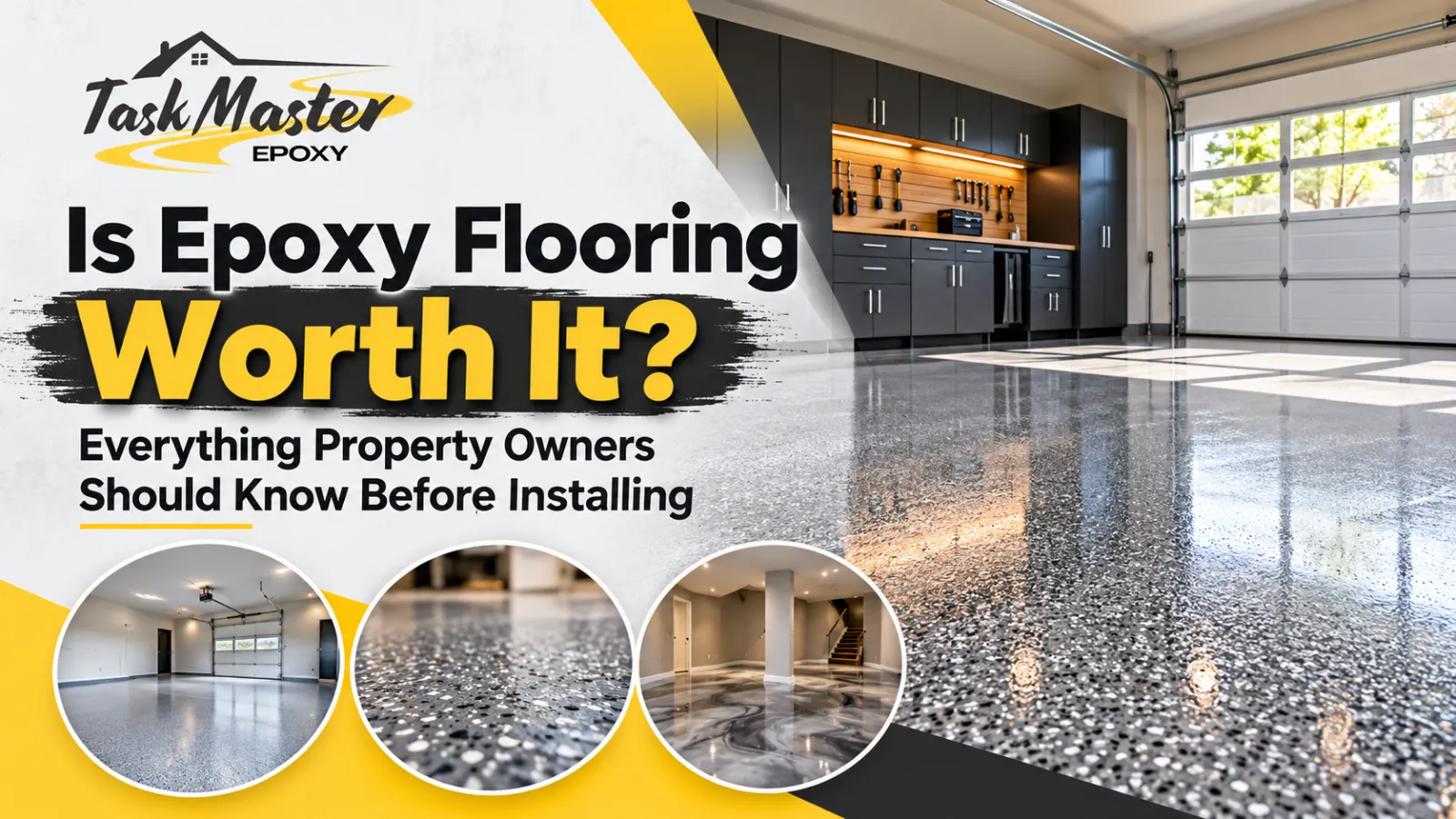
Is Epoxy Flooring Worth the Investment?
For many property owners, epoxy flooring can be a worthwhile investment because it combines durability, design flexibility, and relatively straightforward routine maintenance.
However, its value should be measured over the flooring system’s expected service life rather than by installation cost alone.
1. Protects Concrete Against Everyday Wear
Bare concrete can experience surface dusting, staining, and deterioration from repeated use. An appropriate epoxy coating creates a protective layer that helps reduce direct exposure to abrasion, moisture from the surface, and common contaminants.
This can be particularly useful in garages, warehouses, workshops, and other high-use environments.
2. Makes Routine Cleaning Easier
Epoxy creates a relatively seamless surface with fewer joints where dirt and debris can collect. Many spills can be cleaned using suitable detergents and routine cleaning methods.
For commercial properties, easier cleaning can help simplify daily maintenance procedures.
3. Offers Different Design Options
Epoxy flooring doesn’t have to look like a plain industrial coating. Property owners can choose from solid colours, decorative flakes, quartz textures, and metallic finishes.
This flexibility makes epoxy suitable for both functional spaces and areas where appearance matters.
4. Can Reduce Long-Term Maintenance Needs
When installed correctly and maintained appropriately, epoxy flooring can reduce some of the recurring maintenance associated with exposed concrete.
However, it is not maintenance-free. High-traffic areas may eventually require repairs, recoating, or resurfacing.
5. Provides Performance Options for Different Environments
Epoxy systems can be selected for different levels of abrasion, impact, and chemical exposure.
For example, a warehouse floor may require a different coating specification than a residential garage or commercial showroom.
The key takeaway: Epoxy flooring offers the greatest value when the coating system is matched to the property’s actual operating conditions.
Residential Epoxy Flooring: Is It a Good Choice for Your Home?
Homeowners often consider epoxy flooring when they want a cleaner, more attractive concrete surface without installing traditional tile or other flooring materials.
For property owners exploring residential epoxy flooring Toronto options, it’s important to consider seasonal moisture, winter road salt, vehicle traffic, and the condition of the existing concrete.
Garage Epoxy Flooring
Garages are among the most common residential applications for epoxy.
Vehicles bring water, dirt, road salt, and other contaminants onto the floor. An appropriately selected epoxy system can make these surfaces easier to clean while providing protection against normal garage wear.
Decorative flake systems are particularly popular because they help conceal minor dirt and visual imperfections while offering customizable finishes.
Basement Epoxy Flooring
Epoxy can provide a modern, seamless appearance in basements used as recreation areas, home gyms, workshops, or storage spaces.
However, moisture testing is essential before installation. Basements with active water intrusion or excessive moisture vapour transmission may require remediation or a different flooring solution.
Laundry Rooms and Utility Areas
Epoxy can also be useful in laundry rooms and utility spaces where easy cleaning and resistance to occasional spills are important.
Proper surface texture should be considered because smooth coatings can become slippery when wet.
Is Residential Epoxy Flooring Right for Every Home?
Not necessarily. Epoxy is particularly well suited to properly prepared concrete floors, but it may not be the ideal choice where the substrate has unresolved moisture problems, significant movement, or where a softer flooring material is preferred.
Commercial Epoxy Flooring: Why Businesses Consider It
Commercial properties often experience more demanding conditions than residential spaces. Frequent foot traffic, rolling equipment, cleaning chemicals, and daily operations can place considerable stress on flooring materials.
Commercial epoxy flooring can provide a practical solution when the system is designed for the specific environment.
Warehouses and Distribution Facilities
Warehouse floors may experience forklift movement, pallet traffic, and repeated abrasion.
Heavy-duty epoxy systems can help protect concrete surfaces, while designated colours and line markings can support organized work areas.
The coating must be specified for the actual traffic loads and operating conditions.
Restaurants and Commercial Kitchens
Food preparation areas require flooring that can be cleaned effectively and tolerate frequent exposure to spills.
Specialized resin flooring systems may incorporate textured finishes and coved transitions to support cleaning requirements.
However, not every epoxy system is suitable for commercial kitchens. Areas exposed to high temperatures, thermal shock, or aggressive cleaning chemicals may require specialized alternatives such as urethane cement.
Retail Stores and Showrooms
Appearance is often a priority in customer-facing environments.
Decorative and metallic epoxy systems can create distinctive floors that complement a business’s interior design while providing a durable surface for regular pedestrian traffic.
Manufacturing and Industrial Facilities
Industrial properties may require flooring that tolerates equipment movement, abrasion, and exposure to specific substances.
A professional flooring assessment helps determine the appropriate coating thickness, chemical resistance, surface texture, and installation requirements.
For facilities with special hygiene, static-control, or safety requirements, additional system specifications may be necessary.
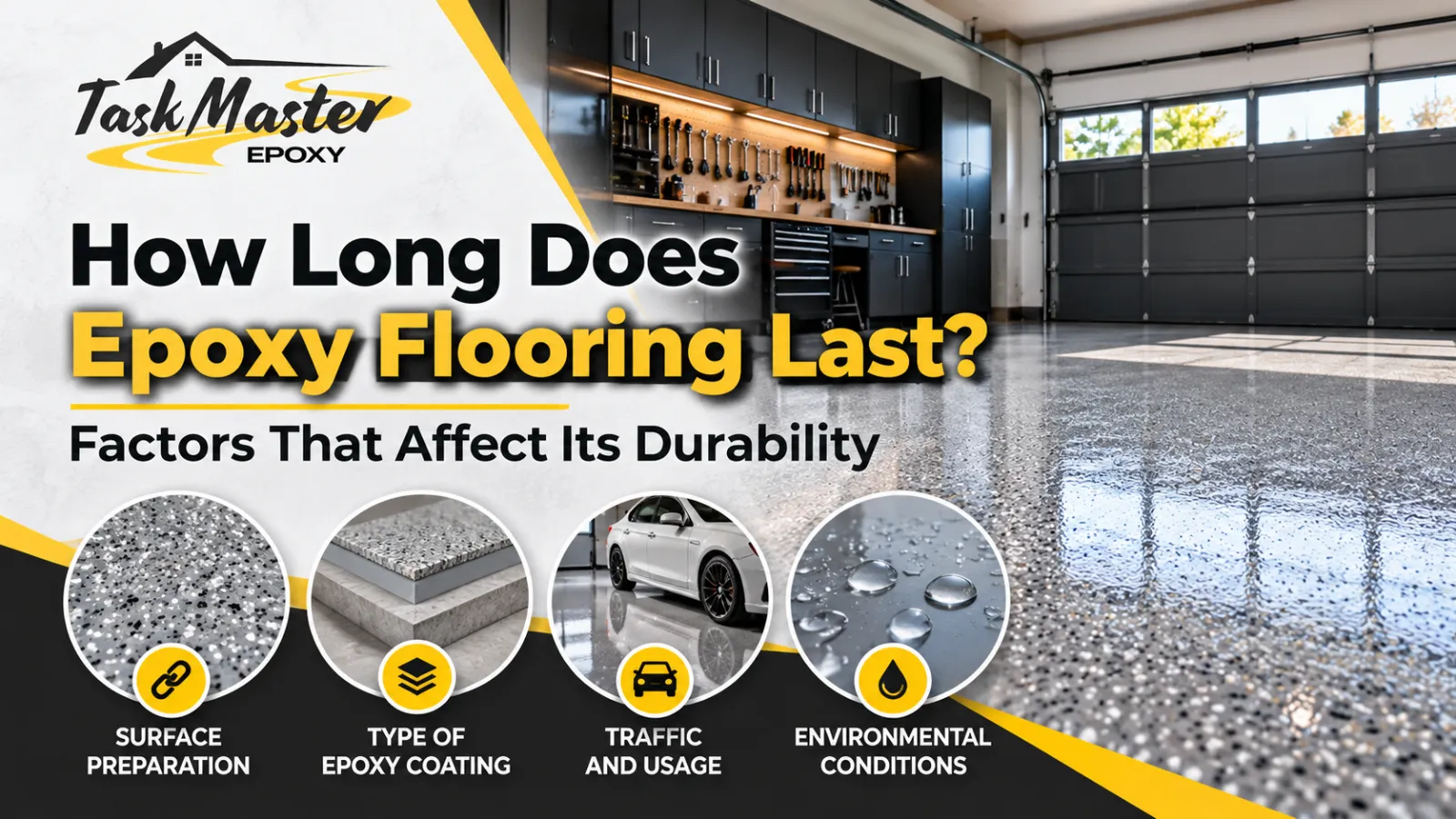
How Long Does Epoxy Flooring Last?
The lifespan of epoxy flooring depends on several factors, including the coating system, installation quality, substrate condition, traffic levels, and maintenance.
Application | General Lifespan Considerations |
Residential garages | A professionally installed system may perform for 10–20 years under suitable conditions |
Residential basements | Low-traffic applications may provide many years of service when moisture is controlled |
Retail and commercial interiors | Longevity depends on foot traffic, cleaning procedures, and coating specification |
Warehouses and industrial facilities | Heavy equipment and abrasion can shorten service life; periodic recoating may be required |
These are general planning considerations, not guaranteed lifespans. Some systems last longer, while others require attention much sooner.
The most important factors influencing longevity include:
- Proper concrete grinding and surface preparation
- Moisture conditions within the concrete
- Appropriate coating thickness and system selection
- Quality of installation and curing
- Daily traffic and exposure to chemicals
- Regular cleaning and timely repairs
Epoxy Flooring vs. Traditional Flooring: Which Is Better?
The best flooring option depends on how the space will be used.
Flooring Type | Main Advantages | Potential Limitations |
Epoxy Flooring | Seamless appearance, durable finish, easy routine cleaning | Requires substrate preparation and curing |
Bare Concrete | Durable substrate, relatively low initial finishing cost | Can stain, dust, and absorb contaminants |
Ceramic Tile | Wide design selection, good water resistance when properly installed | Grout joints require maintenance; tiles may crack |
Vinyl Flooring | Comfortable underfoot, many design options | Performance varies; some products are unsuitable for heavy equipment |
Polished Concrete | Long-lasting appearance, no film-forming epoxy layer | Different stain resistance and surface protection characteristics |
For garages, workshops, warehouses, and many commercial properties, epoxy can offer a useful balance between durability, appearance, and maintenance.
For other environments, polished concrete, tile, or specialized resin systems may be more appropriate.
What Should Property Owners Know Before Installing Epoxy Flooring?
Before selecting a flooring system, property owners should consider the following factors.
1. Evaluate the Existing Concrete
Check for cracks, uneven areas, previous coatings, contamination, and signs of moisture.
Some concrete defects can be repaired during preparation, but significant structural problems may require additional work.
2. Identify How the Space Will Be Used
A residential garage, retail store, and industrial warehouse have different flooring requirements.
Consider vehicle traffic, equipment loads, cleaning chemicals, temperature changes, and the potential for spills.
3. Choose the Right Finish
Decorative flakes, quartz aggregates, solid colours, and metallic effects provide different appearances and functional properties.
Select a finish based on both design preferences and practical needs.
4. Understand Installation and Curing Times
Ask your contractor when the floor can safely handle foot traffic, furniture, vehicles, or heavy equipment.
Curing schedules vary by product and environmental conditions.
5. Review Maintenance Requirements
Find out which cleaning products are recommended and whether the coating requires periodic inspections or maintenance.
A simple maintenance routine can help preserve the floor’s appearance and performance.
6. Work With an Experienced Epoxy Flooring Contractor
Installation quality has a major influence on the final result.
A qualified contractor should assess the concrete, explain suitable coating options, identify potential risks, and provide realistic guidance about performance and maintenance.
How Much Does Epoxy Flooring Cost?
Epoxy flooring installation costs vary considerably depending on the property and the system selected.
The main pricing factors include:
- Floor area: Larger projects may have different per-square-foot costs than smaller installations.
- Concrete condition: Cracks, contamination, moisture issues, and existing coatings can increase preparation requirements.
- Coating system: Decorative, industrial, and specialized systems involve different materials and installation procedures.
- Surface preparation: Grinding, repairs, and moisture mitigation can influence total costs.
- Finish and design: Custom colours, flakes, quartz, and metallic effects can affect pricing.
- Project access and scheduling: Commercial projects requiring phased work or after-hours installation may involve additional costs.
Rather than choosing solely on the lowest quote, property owners should compare the proposed surface preparation, coating materials, installation process, and warranty terms.
A site-specific assessment provides a more reliable estimate than a generic square-foot price.
How to Maintain Epoxy Flooring After Installation
Proper maintenance helps protect the coating and preserve its appearance.
Sweep or dust mop regularly. Removing sand, grit, and debris reduces unnecessary abrasion.
Clean spills promptly. Even chemical-resistant systems have exposure limits, so avoid leaving unknown substances on the floor.
Use suitable cleaning products. Follow the coating manufacturer’s guidance and avoid harsh chemicals that may damage the finish.
Protect high-impact areas. Use appropriate protective measures beneath heavy equipment or furniture where necessary.
Inspect the floor periodically. Address chips, scratches, or damaged areas before they become larger problems.
Commercial facilities should establish a cleaning and inspection schedule suited to their operating conditions.
Why Choose TaskMaster Epoxy for Your Flooring Project?
Selecting the right flooring system is just as important as choosing the right finish.
At TaskMaster Epoxy, we provide epoxy flooring solutions for residential, commercial, and industrial applications, helping property owners choose flooring options suited to their spaces.
Whether you’re considering a decorative garage floor, a commercial coating, or a more demanding industrial flooring application, our team can help you explore suitable options based on the condition of your concrete, intended use, and design preferences.
From surface preparation to the final finish, the goal is to create flooring that balances durability, functionality, and appearance.
Explore our https://taskmasterepoxy.ca/services/ to learn more about available options.
Frequently Asked Questions About Epoxy Flooring
Is epoxy flooring worth it for a residential garage?
Is epoxy flooring suitable for commercial properties?
Can epoxy flooring be installed over old concrete?
Is epoxy flooring waterproof?
How long does epoxy flooring take to install?
Is residential epoxy flooring suitable for Toronto's climate?
Final Thoughts: Is Epoxy Flooring the Right Choice for Your Property?
Epoxy flooring can be an excellent choice for property owners who want a durable, attractive, and relatively easy-to-maintain concrete surface.
For residential garages and basements, it offers design flexibility and practical surface protection. For commercial and industrial properties, appropriately specified systems can support demanding daily operations while simplifying routine cleaning.
However, successful installation depends on more than selecting a colour or finish. Concrete condition, moisture, surface preparation, and the right coating system all influence performance.
Planning to Upgrade Your Floors?
Whether you’re renovating a residential garage or upgrading a commercial property, TaskMaster Epoxy can help you explore flooring options that match your needs.
Contact TaskMaster Epoxy to discuss your project and request a quote.